
Jon Elliott: Wildlife Analysis
Wildlife Analysis
Exhibition Dates: Feb 21st - Mar. 14th
Lorimoto Gallery
1623 Hancock St.
Ridgewood, NY 11385
How did the show come about?
Nao from Lorimoto got in touch last Spring and asked if I'd be interested in a studio visit, and we had a nice visit. Then some time passed without news, then this last December he got back in touch asking if I'd still be interested in showing some of my paintings and that he was filling in his calendar of shows. So, it all worked out.
Tell me a little about the paintings and works on paper in the show?
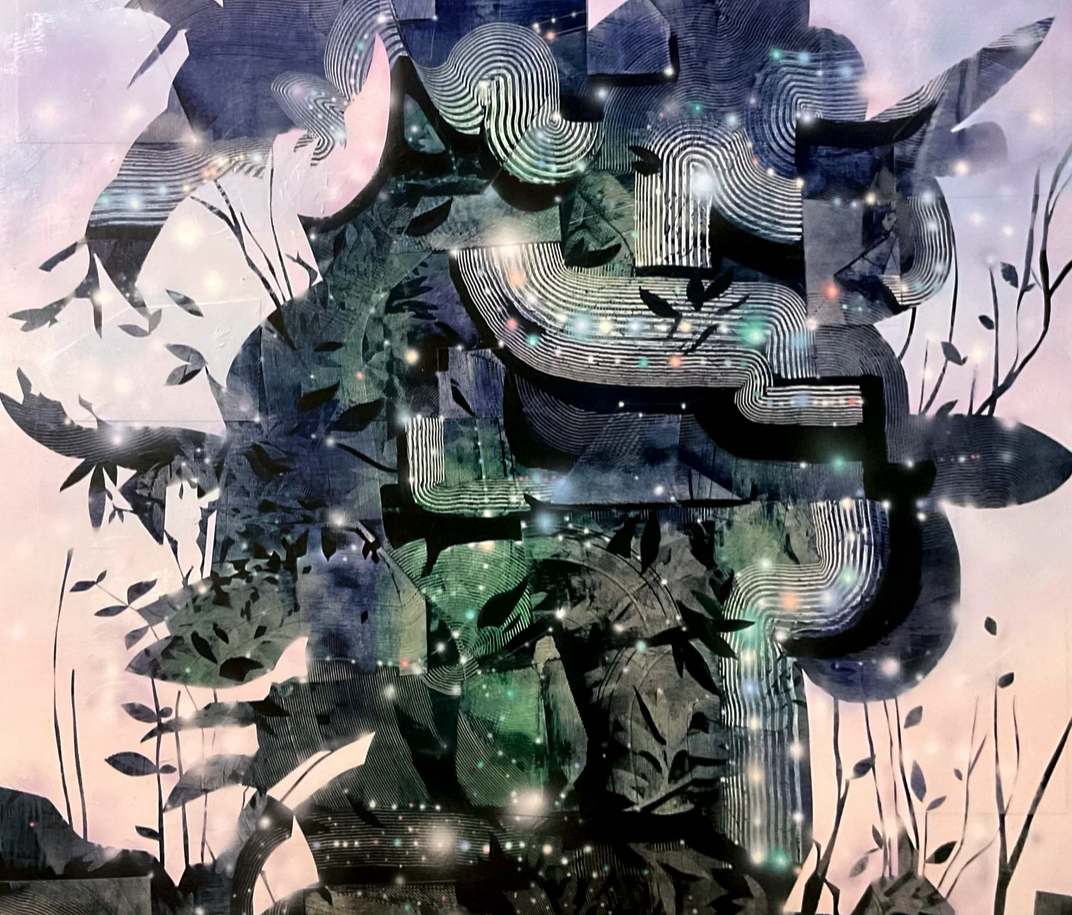
They're all works from the last 2 years. I included a few paintings from 2 years ago because they were some of the first examples of this body of work, and all of the rest of the show comes out of them. I have quite a few small paintings on panels in the show that have been hung in groups. I've made dozens of these small paintings on panel in the last year and a half to help me move quickly through ideas. They paintings on paper are the newest works represented, and I've mounted them to panel so that they fit in with the rest of the collection.
What's the process?
The process starts out highly improvisational, and then I take steps to push back and highlight different sections and take back a little control.
What was it that first sparked your interest in art?
I think spending time in my university library combing through the books on art history and artist monographs might have actually sparked my interest for the first time. I was taking classes that were supposed to lead me into the medical field, or somewhere in the sciences, but I was much more interested in exploring the arts section in the library between classes. I eventually decided to take a pause in my chosen course, and took some introductory classes in drawing and painting.
How did growing up form your artistic experience?
I didn't have much, if any, experience with museums or galleries growing up. I didn't know much of anything about art history except for the bare bones basics. But I did take art classes in high school where I must have learned a little more. Then, like I said, as an undergraduate student I began a self-directed path that lead me into a more formal and disciplined approach to becoming an artist. I think growing up I always considered myself pretty good at drawing and painting, and did quite a bit of it independently, so when I eventually did take those intro art classes I felt like I belonged there.
How did you find your way to New York?
As an undergraduate student at Georgia State U, taking art classes, it turned out I was pretty ambitious in my projects, and a decent artist. One of my professors, Larry Walker, suggested that I apply for something he knew about that was going to happen in NYC. I'd never considered NYC as a place I might visit. I didn't apply for whatever it was, but it did get me thinking about NYC as a possible destination. Eventually as a grad student at RISD I began taking the bus down to NYC and started exploring the city a bit. Luckily several of my fellow grad students moved to NY at the end of grad school so the transition was easy.
What was your first introduction to the art world?
I guess the introduction to the art world came in the form of art parties that were put together by other artists and art students in Atlanta while I was still an undergraduate student there. I do remember that there was an anti "commercial gallery" sentiment among a lot of the artists I was around. A lot of older, more experienced artists, including some professors, would say things like "watch out for commercial galleries, they do not have your best interests at heart and they can hurt you more than help." I eventually did do a show in Atlanta, right before I left for grad school, at a commercial gallery though. There was another opportunity at an artist-run space that I could have shown at instead. I really should have chosen that space.
Who helped you get your foot in the door?
I feel like it has always been other artists who have helped me get my foot in the door. Different fellow artists at different times. Even if it's just been a casual introduction.
What kinds of challenges have you experienced that have changed your studio practice?
I really can't stand oil paint any more, that was big. Storage challenges have forced new methods and materials as well. Moving to different studios is always a new start that leads to change. Of course financial challenges may be the Master Challenges.
How does your job affect what you are working on?
Often times the jobs I take drain my energy and I don't have the gumption to work all day, then spend enough time in the studio to have anything productive happen. So, I end up taking semi-forced breaks from my otherwise very active studio practice. It's a drag, but I do still try to spend time thinking about what I want to do when I start back up.
What are you currently thinking about and working on next?
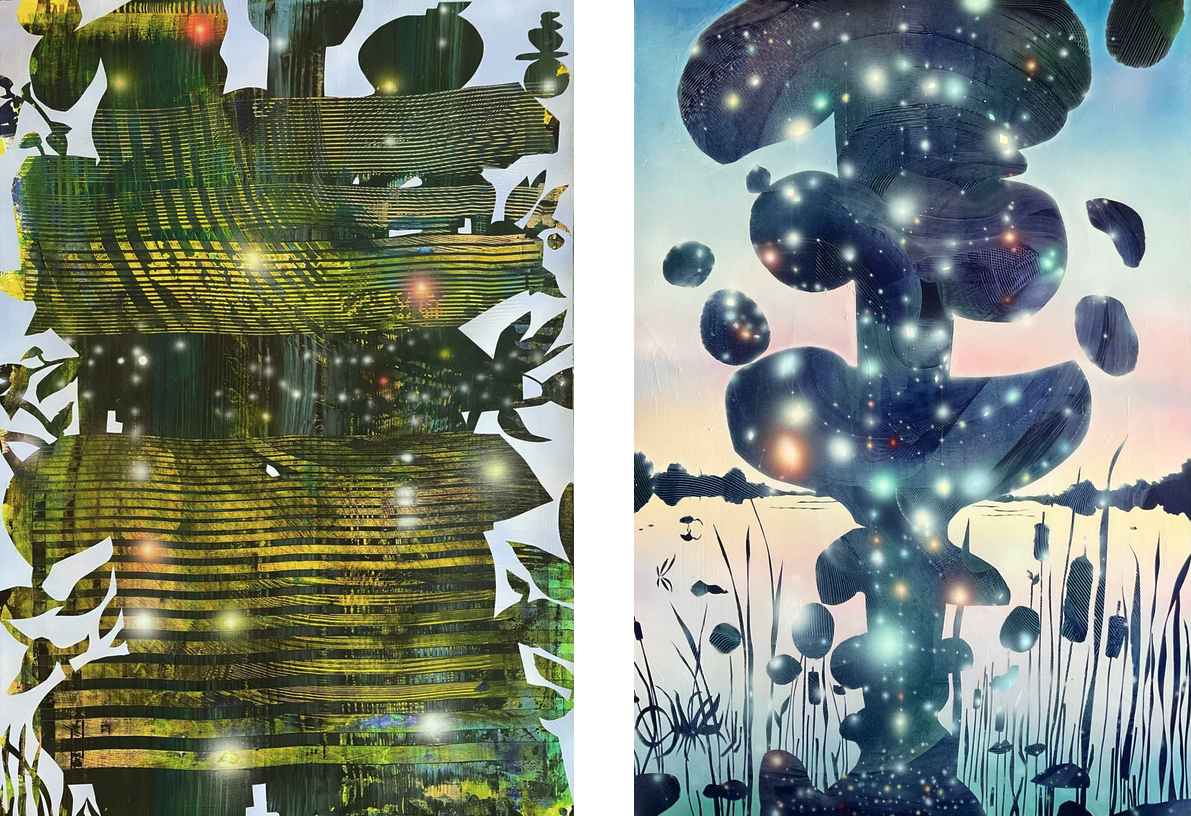
I have a handful of paintings I want to finish. I have a few different micro directions I want to take them next. It's just a matter of getting the studio time, working the process and seeing which directions are working best for me.
Tell me about a really memorable moment you have experienced as an artist?
There are many. This one immediately comes to mind though. I was honored and surprised to be chosen to create a public art piece that I completed back in 2019. The budget wasn't very big, and in order for me to make it worth my time and commitment I decided I would need to take the fabrication and installation budget for myself and create the ceramic tiles myself. Plus, I was excited about making it myself as well, it really felt like a huge project that was public, but also very personal. I took it like a job that I was very honored and happy to take on. A project that would be around longer than I would, and would be a small part of the lives of thousands K-5 grade students over the years. It was 2 handmade ceramic friezes on 2 sides of the entrance of a new public school. I designed, fabricated, and installed the tiles on the front of the school. It was two weeks of stress filled outdoor installation in July during a brutal heat wave. There were many seemingly insurmountable technical issues during those two weeks, and I was a bit unraveled. I did hire a friend to help me, but he couldn't stay all the way through.
On my last day there, a Saturday or Sunday, I was up on a ladder for a few hours trying to scrub off some gunk left behind by the tape I used to cover my tiles up. One day in the middle of the install process there was an emergency situation when a storm came through and could have undermined the mortar under the tiles I had just installed. So it was an emergency and I used duct tape, the strongest tape I had, to secure the plastic sheeting and protect my project. It left a little tape gunk behind and had slightly stained the unprotected concrete around my installation. On the last day I was there I spent hours scrubbing the gunk with various solvents in mid ninety degree heat. It was a weekend and no one else was around, just the traffic going by on the boulevard, sometimes crashing at 40 mph into a giant pothole right behind me. When I was finally done scrubbing, I loaded everything up into my car, work platform, ladder, partial bags of mortar and grout, tools, buckets, etc, etc, and was relieved that I could finally go, and leave this project behind.
My car wouldn't start. I had to walk a couple miles in the heat to an Autozone type of place and buy a new battery. I had to duck into various corner stores and drug stores to buy water and hang out in the air conditioning so that I wouldn't overheat. I installed my new battery, held my breath, turned the ignition and the car started. I put my stick shift in gear and rolled past that project and was done. Anyway, that's one story that came to mind immediately. It was an achievement to have successfully completed this project. But it was a tremendous hustle. It's also a reminder of the absurd amount of hustle, dedication, and work that can sometimes go into making a living as an artist. When I started the path, I thought I was supposed to be a doctor or a scientist, or some kind of related professional. When I took on being an artist I didn't really expect to be paid for it, and didn't know why I was doing it except that I didn't really care about anything else.
What do you do to just relax and get away?
I go through periods of reading a lot. I do like to get together with friends late at night and talk about art and life etc.
What are a few things that you have read or seen lately that you are thinking about?
I tend to like short stories in the speculative fiction zone. I like Ken Liu's short stories. I still think about Philip K. Dick's last few works. I recently read The Loft Generation by Edith Schloss which tells her story of moving to NYC in the 30's and of her fellow artists living in basically abandoned loft spaces around Manhattan, and what their lives were like. A great companion book to Ninth Street Women, another great history of mid-century art life in NYC.
Who are a few artists you are following at the moment?
I don't specifically follow any other individual artists really. I'm interested in so many other artists though, but no one in particular, more then the rest. I'm almost daily blown away by how many good artists there are out there.
If you could give advice to your younger self - what would it be?
There are all kinds of things I wish I had done differently, and so many situations where I wish I knew then what I know now. Maybe I should be listening to the advice of my younger self and just keep on, keeping on. Don't worry about the future because we never really know what will actually happen. Don't be too cautious. Be naive about the world and pretend things aren't stacked up against you. My younger self was like that, and I should be taking that advice.